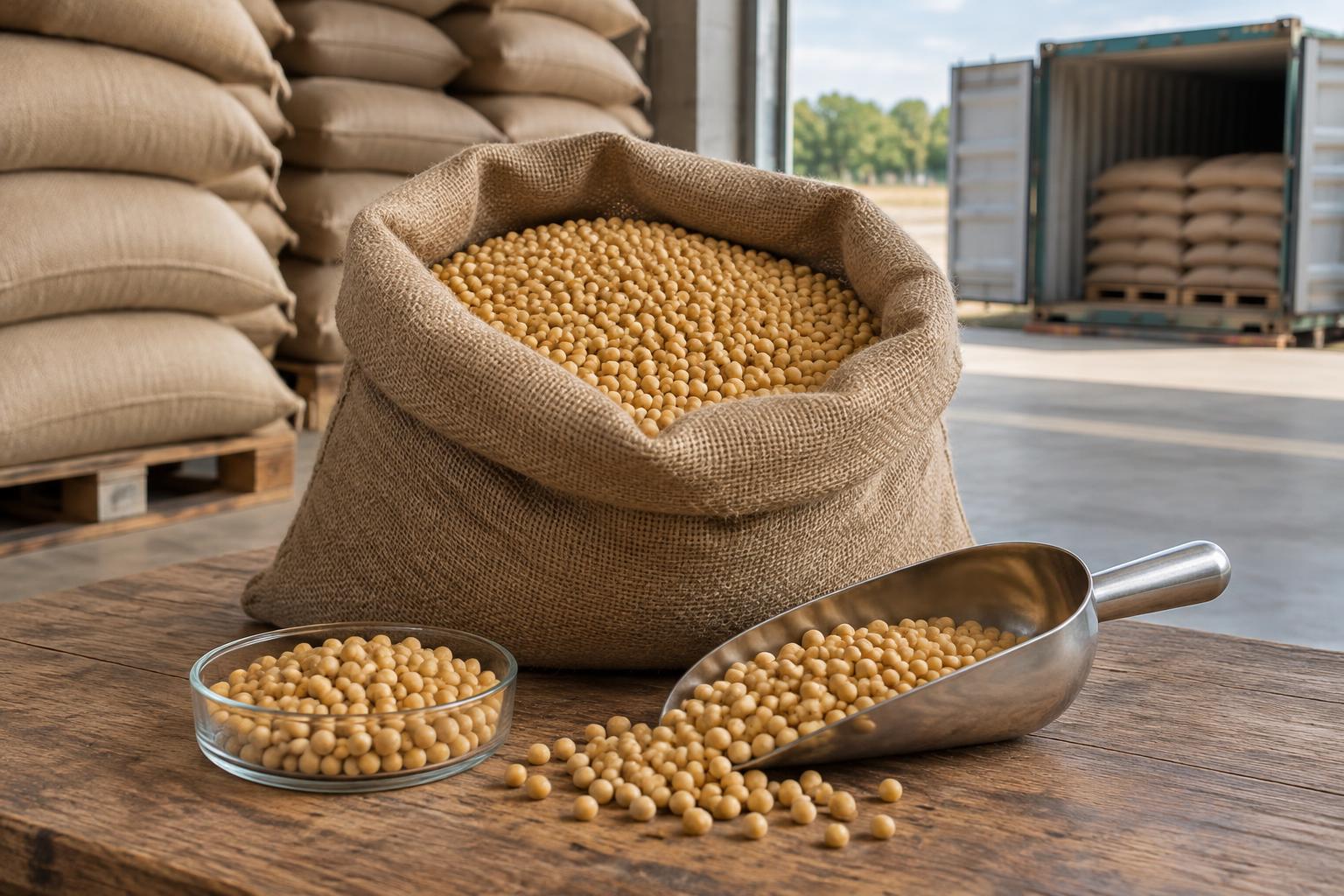
The packing choice changes total procurement cost
Bulk vessel loading, container liners, woven or laminated sacks and other options impose different material, labour, unloading and contamination risks. The cheapest product quotation may not be the cheapest delivered consignment. Request a packaging description that matches the port and the buyer’s receiving equipment.
Specify bags and labels precisely
For bagged cargo, define net weight, bag construction, seam or seal, palletisation, pallet treatment where applicable and labelling requirements. Food-contact conformity may be relevant for particular products and jurisdictions. Ask whether the exporter can provide traceability marks, lot numbers and loading photographs. Never publish a packaging capability until confirmed by a supplier.
Confirm container preparation
Containerised agricultural commodities are sensitive to moisture, damaged floors, odours, residue and condensation. Specify inspection of the empty unit, lining needs and agreed loading conditions. Documentary and photographic evidence at stuffing can reduce disputes about condition on arrival. Whether additional desiccants or liners are suitable requires the cargo operator’s judgment.
Get comparable packing offers
Ask exporters to quote the same net cargo weight, packing style and named delivery term. Include who pays for bags, pallets, inspection, container demurrage and unloading. If the first order is a trial shipment, write that into the RFQ rather than requesting an unrealistic annual commitment.
Frequently asked questions
Technical and commercial answers below are general sourcing guidance. Actual contracts and current destination rules prevail.
Can I request 25 kg or 50 kg bags?
You can request a bag weight; individual exporters must confirm supported formats.
Are containers always better than bulk shipments?
No. Compare cargo volume, unloading constraints, freight economics and handling risks.
Is palletisation included?
Only if an exporter expressly includes it in a written quote.